
oday’s competitive manufacturing landscape, product design goes beyond aesthetics. It must combine durability, functionality, branding, and efficiency. Therefore, manufacturers increasingly adopt In-mold decoration (IMD) to achieve greater design flexibility while reducing production complexity. At Polar Printed Electronics, IMD components play a critical role in enabling innovative, high-performance product designs across industries.
This article explains what IMD components are, how in-mold technology works, and why IMD has become essential for modern product design.
IMD Components and Their Impact on Design Flexibility
IMD components are plastic parts produced using film insert molding, where manufacturers place a decorative film or graphic overlay film inside the mold before injection. During molding, the film permanently fuses with the plastic substrate. As a result, graphics, textures, and functional layers become an integral part of the component instead of a surface addition.
Unlike conventional painting or labeling, IMD removes secondary processes. Consequently, manufacturers improve consistency, reduce defects, and support advanced design requirements.
In-Mold Technology for Enhanced Design Flexibility
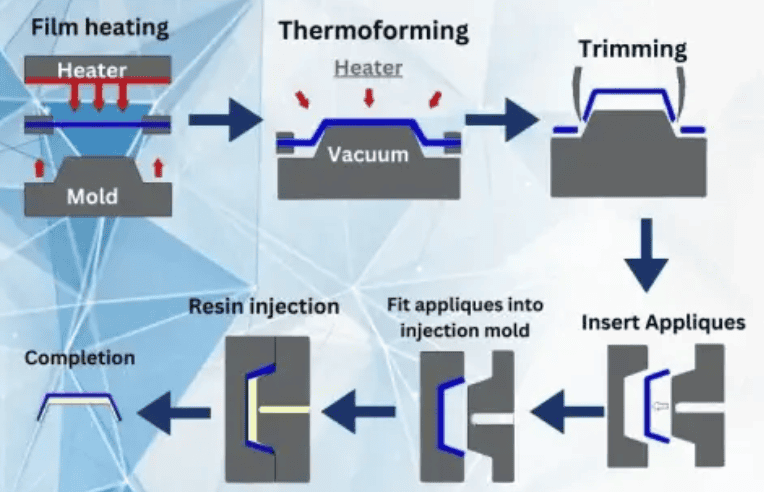
The in-mold technology process starts with a pre-printed or functional film. This film can include colors, textures, icons, logos, or conductive elements. After forming, operators position the film precisely inside an injection mold. Then, molten plastic flows behind the film and bonds seamlessly with the base material.
Because decoration happens during molding, IMD delivers excellent alignment, repeatability, and durability. Moreover, it enables complex surface decoration that traditional methods cannot support.
Design Flexibility Enabled by IMD Components
1. Design Flexibility for Complex and High-Curvature Designs
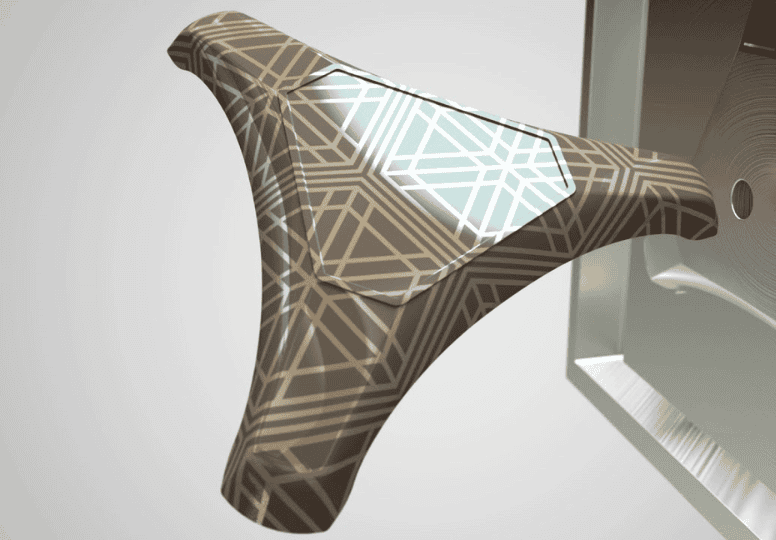
One of the most significant advantages of IMD components is unmatched design flexibility. Designers create high-curvature design surfaces, sharp contours, and smooth transitions without compromising visual quality. In addition, 3D in-mold decoration enables deep draws and three-dimensional shapes.
As a result, IMD supports futuristic designs that stand out in both industrial and consumer products.
2. Design Flexibility with High-End Surface Finish
IMD delivers a high-end surface finish directly from the mold. Manufacturers integrate glossy, matte, textured, or metallic-look surfaces into the decorative film itself. Therefore, they eliminate the need for painting, coating, or post-printing.
This approach improves appearance while enhancing scratch resistance, chemical resistance, and UV stability. Consequently, products retain their premium look throughout their lifecycle.
3. Design Flexibility for Logo and Branding Integration
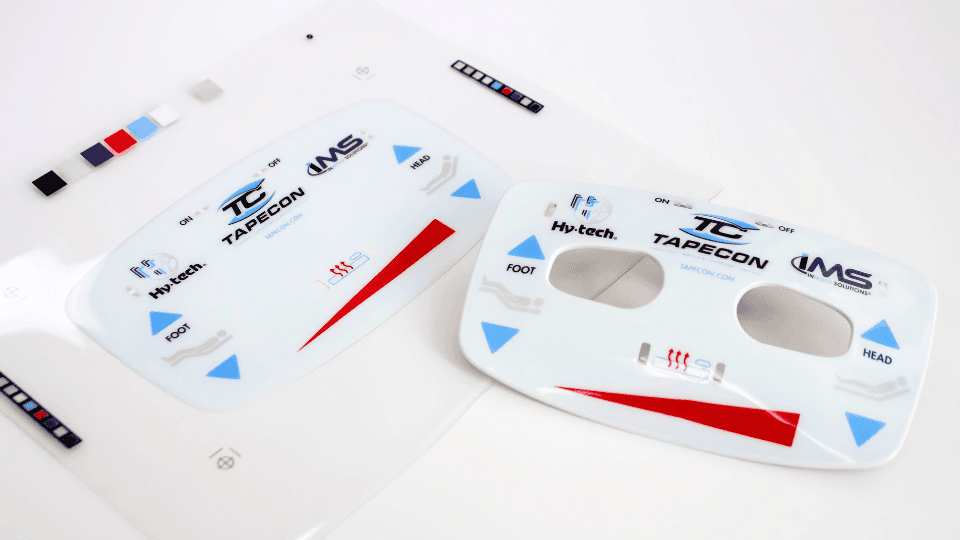
Branding plays a vital role in product identity. With IMD, logo and branding integration becomes precise and permanent. The process embeds logos, symbols, and text beneath the surface, which prevents fading, peeling, or wear.
Furthermore, IMD reproduces multi-color graphics and fine details with high consistency. This capability makes IMD ideal for control panels, consumer electronics housings, and branded industrial interfaces.
4. Enabling Complex Surface Decoration
Traditional decoration methods struggle with uneven or curved surfaces. However, IMD supports complex surface decoration across flat, curved, and three-dimensional parts. Since the decorative film conforms to the mold shape, the finished component maintains perfect graphic alignment.
As a result, designers integrate visual elements across entire surfaces without breaks or distortion.
IMD Components vs. Conventional Metal Parts
Weight Reduction without Compromising Strength
Another key benefit of IMD is weight reduction vs metal parts. Plastic IMD components weigh significantly less than metal alternatives while delivering comparable structural integrity for many applications.
This weight reduction improves energy efficiency, simplifies installation, and lowers overall system load. Therefore, industries such as automotive interiors, electronics enclosures, and medical devices widely adopt IMD.
Reduced Assembly and Manufacturing Cost
IMD removes painting, labeling, and extra assembly steps, which directly lowers production costs. In addition, fewer processes reduce quality failures. Over time, manufacturers achieve higher yields and faster time-to-market.
Applications of IMD Components in Product Design
IMD components serve a wide range of industries due to their versatility and reliability.
Consumer Electronics
- Touch control panels
- Device housings
- Decorative front panels
Industrial Equipment
- Control interfaces
- Branded enclosures
- Durable operator panels
Automotive and Mobility
- Dashboard components
- Switch panels
- Interior trims
In each case, design flexibility allows manufacturers to balance aesthetics, performance, and durability effectively.
Role of Polar Printed Electronics in IMD Innovation
At Polar Printed Electronics, we specialize in advanced IMD components tailored to modern product requirements. By combining film insert molding, precision tooling, and printed electronics expertise, we help customers realize complex designs with functional integration.
Our solutions support:
- High-curvature and 3D designs
- Durable decorative film integration
- Consistent branding and surface quality
- Lightweight alternatives to metal components
As a result, our IMD solutions empower designers and engineers to innovate without limitations.
Why IMD Is the Future of Product Design
As markets demand smarter, lighter, and visually appealing products, IMD continues to gain momentum. Its ability to combine aesthetics and functionality into a single molding process makes it a future-ready solution.
More importantly, IMD aligns perfectly with modern design goals—greater design flexibility, fewer manufacturing steps, and higher product value.
Conclusion
IMD components have transformed product design and manufacturing. Through in-mold decoration, manufacturers achieve superior surface quality, seamless branding, and complex geometries while reducing weight and cost.
For companies that want to innovate without compromise, IMD is no longer optional—it is essential. At Polar Printed Electronics, we continue to push the boundaries of IMD to support next-generation product design with unmatched design flexibility.