
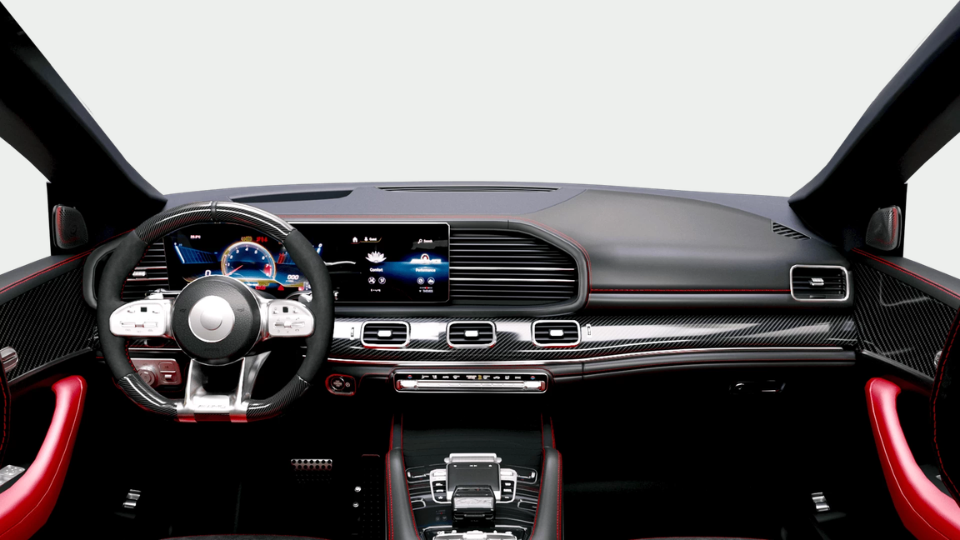
Modern product development demands more than functional performance alone. Manufacturers now prioritize aesthetics, durability, and production efficiency at the same time. In-mold technology addresses all three needs by combining decoration and molding into a single manufacturing step.
At Linepro Controls, engineers use in-mold processes to create visually refined and functionally reliable components. For this reason, designers and manufacturers must clearly understand In-mold decoration (IMD) and In-mold labeling (IML) within injection molding.
What Is In-Mold Technology?
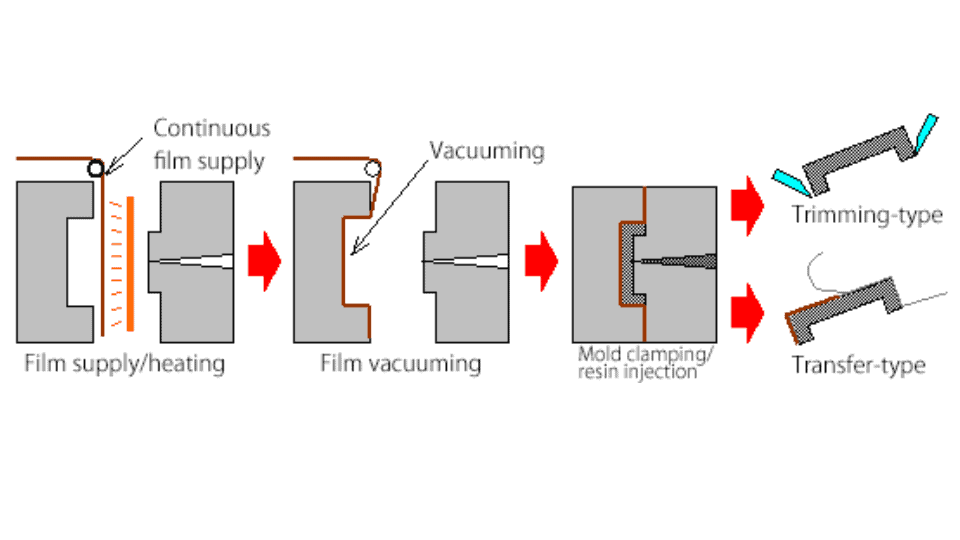
In-mold technology integrates decoration directly into the injection molding process. Instead of applying graphics after molding, manufacturers place a pre-printed film or label inside the mold cavity before injecting molten plastic.
Once the plastic fills the mold, it bonds with the film through overmolding. As a result, decoration becomes a permanent part of the molded component. This one-step decoration approach removes the need for painting, printing, or adhesive labeling.
Because manufacturers eliminate secondary operations, they improve cycle time, reduce waste, and achieve consistent surface quality.
Why In-Mold Technology Matters in Printed Electronics
Printed electronics often combine graphics with functional layers such as conductive tracks or capacitive sensors. Traditional decoration methods can damage these delicate layers. In contrast, in-mold technology protects printed films by embedding them beneath the plastic surface.
This protective structure improves resistance to abrasion, chemicals, moisture, and UV exposure. Therefore, manufacturers frequently use in-mold solutions for HMI panels, automotive interiors, and consumer electronics.
At Linepro Controls, engineers rely on this approach to deliver durable, functional surfaces without compromising design intent.
Understanding In-Mold Decoration (IMD)
In-mold decoration (IMD) uses a formed IMD film that carries graphics or functional elements. During injection molding, molten plastic bonds directly to the film, permanently locking the decoration into the part.
IMD Process Steps
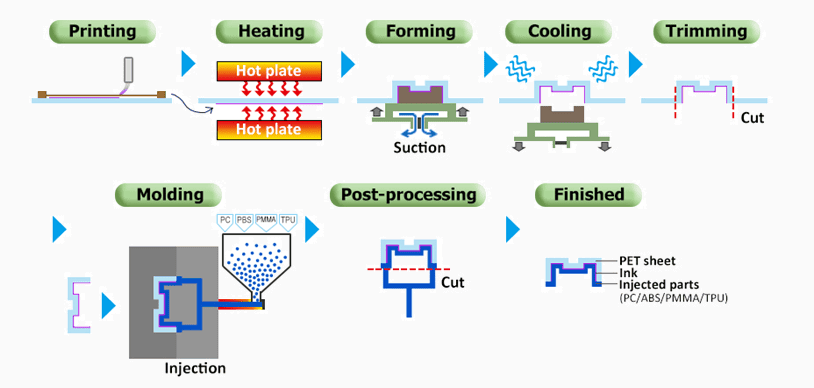
First, manufacturers print the IMD film using screen, offset, or digital printing methods. Next, they thermoform the film to match the final component geometry. After forming, technicians trim the film and place it into the mold using precise film positioning and registration systems.
Finally, injection molding completes the process as the plastic flows over the film and creates a unified structure.
Key Advantages of IMD
IMD supports complex three-dimensional designs while maintaining surface durability. It also eliminates secondary painting and printing steps. In addition, the process ensures consistent quality during high-volume production.
Because of these advantages, manufacturers widely use IMD in automotive interiors, appliance control panels, and medical devices.
Understanding In-Mold Labeling (IML)
In-mold labeling (IML) focuses on flat or lightly contoured surfaces. Instead of formed films, the process uses flat IML film or labels printed with branding or product information.
During molding, the injected plastic fuses with the label and forms a seamless surface finish.
IML Process Basics
Manufacturers first create a pre-printed film or label, typically on polypropylene substrates. Automated systems then place the label accurately inside the mold cavity. When molten plastic enters the mold, it bonds directly with the label and forms a single integrated component.
This method delivers excellent repeatability and surface consistency.
Key Advantages of IML
IML supports cost-effective production for large volumes. It provides smooth, high-quality finishes and resists moisture, chemicals, and abrasion. As a result, manufacturers often select IML for packaging, consumer products, and industrial containers.
IMD vs IML: Key Differences
Although both processes rely on in-mold technology, they serve different design goals.
IMD enables complex shapes and premium aesthetics, making it ideal for decorative and functional surfaces. In contrast, IML works best for flat or gently curved components produced in high volumes.
Additionally, IMD films often integrate electronic functionality, while IML films focus mainly on branding and information. Therefore, part geometry, functional requirements, and production scale guide the final process selection.
Role of Film Insert Molding
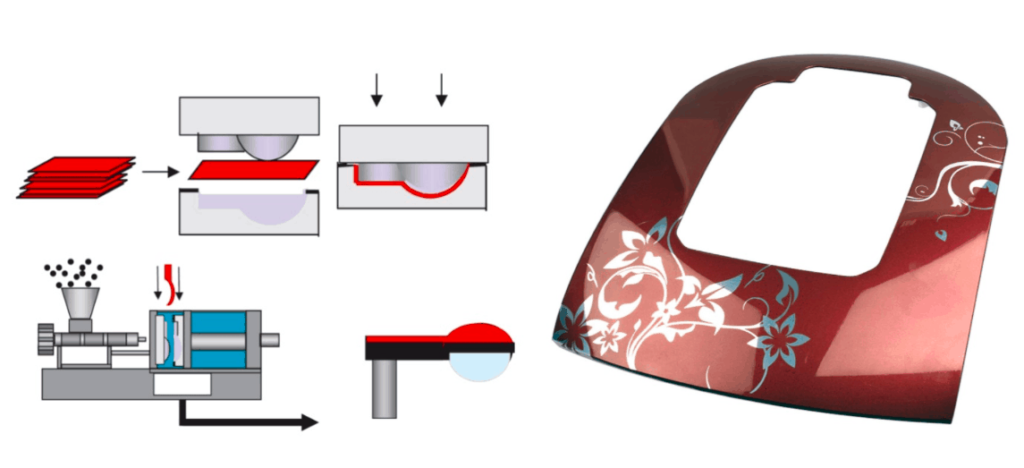
IMD and IML both fall under film insert molding. In this approach, the film acts as an insert during injection molding. Accurate film positioning and registration play a critical role, as misalignment can affect visual quality and functionality.
At Linepro Controls, controlled automation ensures precise alignment of decorative and electronic layers. This precision supports advanced injection molding decoration for smart surfaces and HMI applications.
Overmolding and Surface Protection
Overmolding adds long-term value to in-mold components. As molten plastic flows over the film, it encapsulates the decoration and shields it from external damage.
This structure protects graphics and printed electronic circuits from wear and environmental exposure. Consequently, products maintain performance and appearance throughout their service life.
Applications of In-Mold Technology
Manufacturers across industries adopt in-mold technology to improve product performance and aesthetics. Automotive brands use IMD for durable dashboards and control panels. Consumer electronics manufacturers rely on it for sleek, scratch-resistant surfaces.
Meanwhile, medical and industrial equipment manufacturers benefit from hygienic, easy-to-clean finishes. As demand for smart interfaces increases, IMD and IML continue to support capacitive touch, backlighting, and sensor integration.
Conclusion
In-mold technology has redefined injection molding by combining decoration, protection, and efficiency into one streamlined process. In-mold decoration (IMD) enables premium designs with functional integration, while In-mold labeling (IML) supports scalable, cost-effective production.
For printed electronics manufacturers, these processes unlock durable, visually refined, and technologically advanced components. At Linepro Controls, IMD and IML serve as foundational tools for next-generation product development.
