
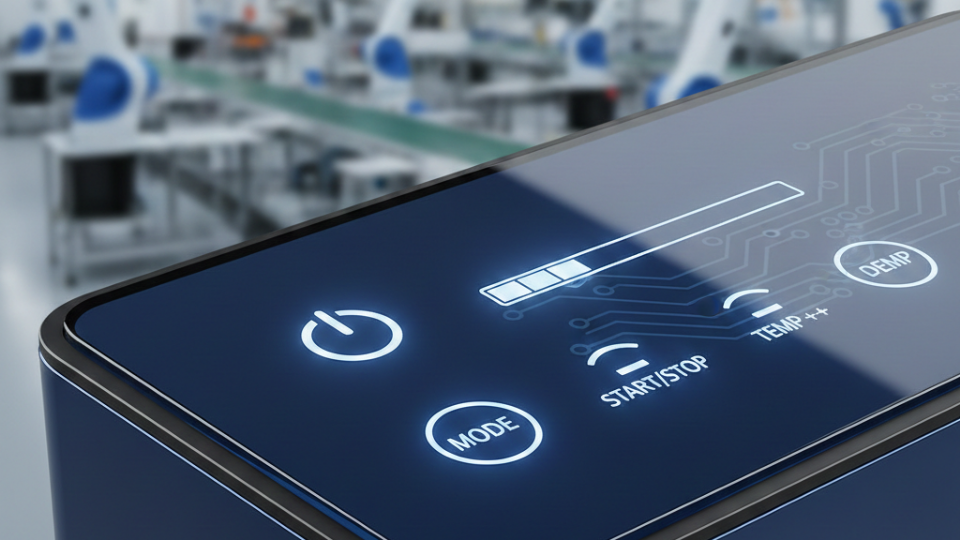
The elimination of secondary painting is changing how plastic components are manufactured. Today, manufacturers want faster cycles, stable quality, and lower cost. However, traditional printing and painting methods struggle to meet these needs. They add steps, increase defects, and slow production.
In contrast, in-mold decoration (IMD) offers a better solution. It integrates decoration directly into the injection molding process. As a result, components leave the mold fully finished. Because of this, IMD is replacing secondary printing across many industries, including printed electronics.
Elimination of Secondary Painting in Modern Plastic Manufacturing
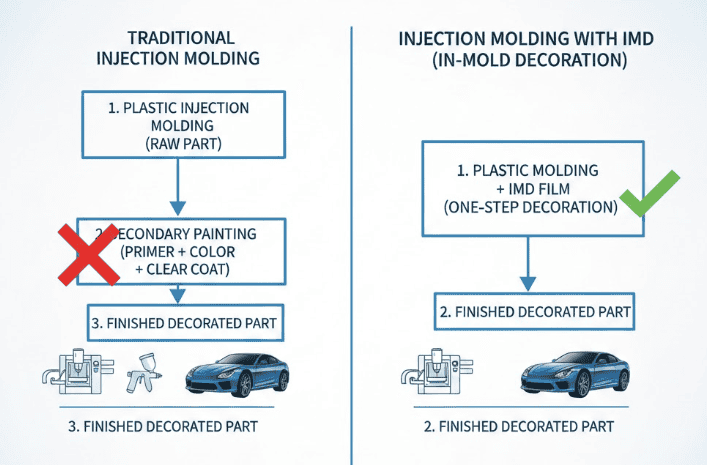
Secondary painting happens after molding. It includes screen printing, spray painting, and pad printing. Although common, these steps create several problems.
First, they increase handling. Each part must move between machines. Second, they need drying or curing time. Third, they raise the risk of damage or misalignment. Therefore, defects become more common.
The elimination of secondary painting removes these risks. IMD combines molding and decoration into one step. Consequently, manufacturers reduce complexity and improve repeatability.
One-Step Decoration That Eliminates Secondary Painting
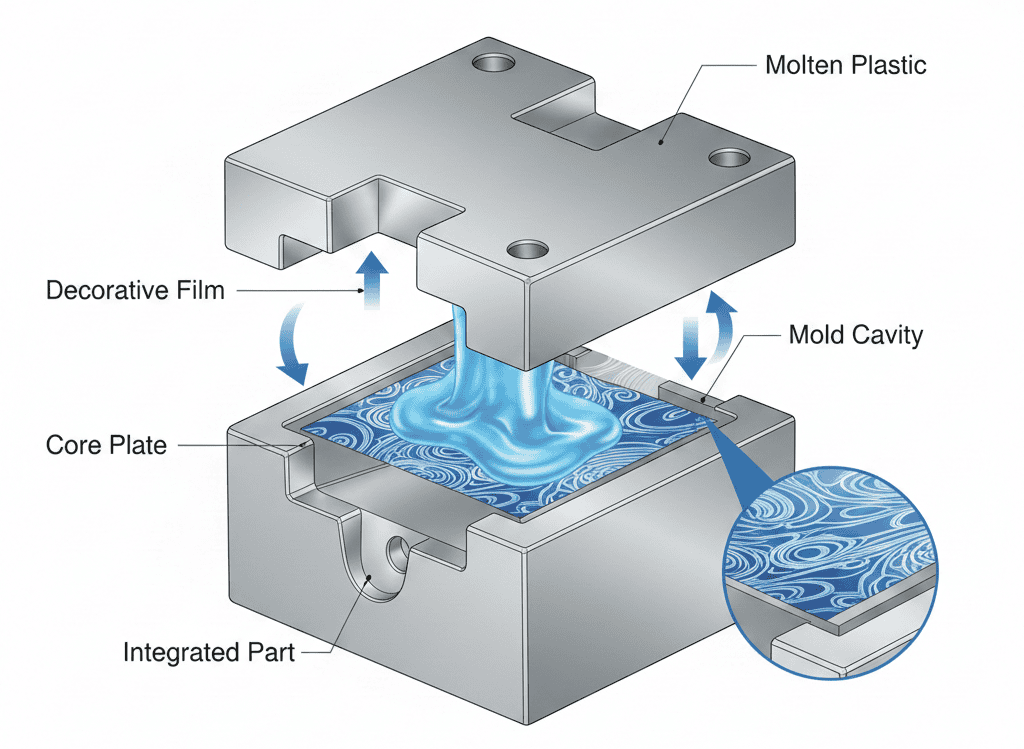
In-mold decoration (IMD) places a printed or functional film inside the mold. During injection, molten plastic bonds with the film. This process creates a permanent connection.
Because decoration occurs during molding, IMD supports one-step decoration. There is no need for extra printing or painting. As a result, cycle times shorten and handling drops.
In addition, injection molding decoration improves consistency. Every part follows the same controlled process. Therefore, quality remains stable even at high volumes.
Cost-Effective Decoration for High-Volume Production
Manufacturers often focus on cost. Secondary painting increases cost due to labor, materials, and rework. Over time, these costs add up.
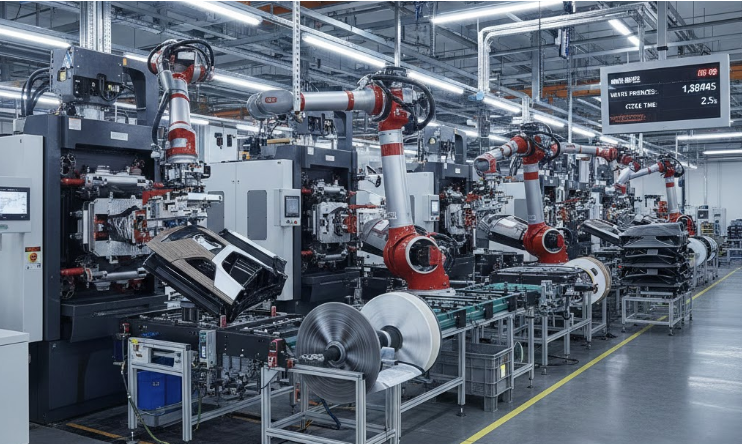
IMD offers cost-effective decoration, especially in high-volume production. Although tooling requires initial investment, per-part cost drops quickly. Furthermore, automation becomes easier because fewer steps are involved.
Because IMD reduces scrap and rework, overall efficiency improves. Therefore, manufacturers achieve better margins without sacrificing quality.
High Yield Rate through Process Integration
Each extra process step creates risk. With secondary printing, defects often appear during handling or alignment. This lowers yield.
IMD improves the high yield rate by removing these steps. Decoration is locked in place during molding. Therefore, graphics remain aligned and protected.
In addition, fewer operations mean fewer chances for error. As a result, IMD supports reliable mass production for printed electronics and control panels.
Long-Term Color Stability without Surface Coatings
Painted surfaces fade over time. UV exposure, heat, and wear reduce color quality. This is a common problem with secondary printing.
IMD solves this issue. Graphics sit below the plastic surface. Because of this structure, IMD provides long-term color stability.
Even after years of use, colors stay sharp. Therefore, IMD is ideal for products that must look new for a long time.
Improved Abrasion Resistance and Chemical Resistance
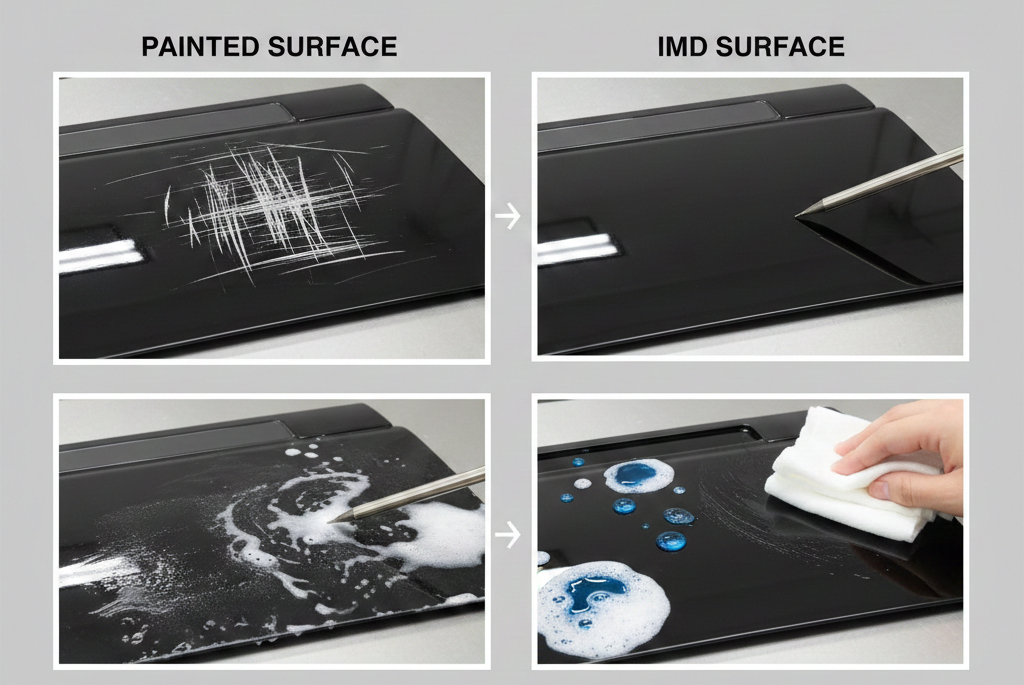
Surface coatings scratch easily. They also react to cleaning agents and chemicals. This limits their use in demanding environments.
IMD parts show strong abrasion resistance and chemical resistance. The decorative layer stays sealed inside the component. As a result, daily wear does not damage the design.
This makes IMD suitable for industrial controls, medical devices, and consumer electronics.
Design Flexibility without Extra Manufacturing Steps
Design freedom matters. Secondary printing struggles with curves, edges, and complex shapes. In contrast, IMD supports advanced designs.
IMD enables:
- Curved and textured surfaces
- Fine details and gradients
- Transparent and backlit areas
- Multi-layer printed electronics
Because decoration happens during molding, this design flexibility does not add extra steps. Therefore, engineers can innovate without increasing cost.
Environmental Benefits of the Elimination of Secondary Painting
Sustainability is another key factor. Painting uses solvents, chemicals, and energy. It also creates waste.
The elimination of secondary painting reduces:
- VOC emissions
- Paint waste
- Energy use
- Rejected parts
IMD supports cleaner production. As a result, manufacturers meet environmental goals while maintaining performance.
Why Linepro Controls Adopts In-Mold Decoration
For Linepro Controls, IMD supports advanced product requirements. Printed electronics need thin, durable, and precise components. Secondary printing cannot meet these demands reliably.
IMD offers:
- Integrated decoration and function
- Stable quality at scale
- High yield rates
- Durable surfaces
Because of these benefits, IMD aligns perfectly with future-ready manufacturing.
Conclusion
The elimination of secondary painting is not just a trend. It is a necessary shift. In-mold decoration delivers durability, efficiency, and design freedom in one process.
By replacing secondary printing, IMD enables one-step decoration, reduces cost, and improves quality. For Linepro Controls, IMD supports scalable and sustainable innovation.
