
Film positioning plays a critical role in IMD manufacturing. It directly controls graphic alignment, repeatability, and dimensional accuracy in printed electronic components. When manufacturers control film positioning from the start, they achieve stable geometry and consistent visuals at scale.
At Linepro, IMD manufacturing focuses on precision rather than decoration alone. Every step—from film placement to overmolding—supports dimensional control and visual consistency. As products become thinner and more complex, this approach delivers reliable results.
IMD Manufacturing and Its Role in Printed Electronics
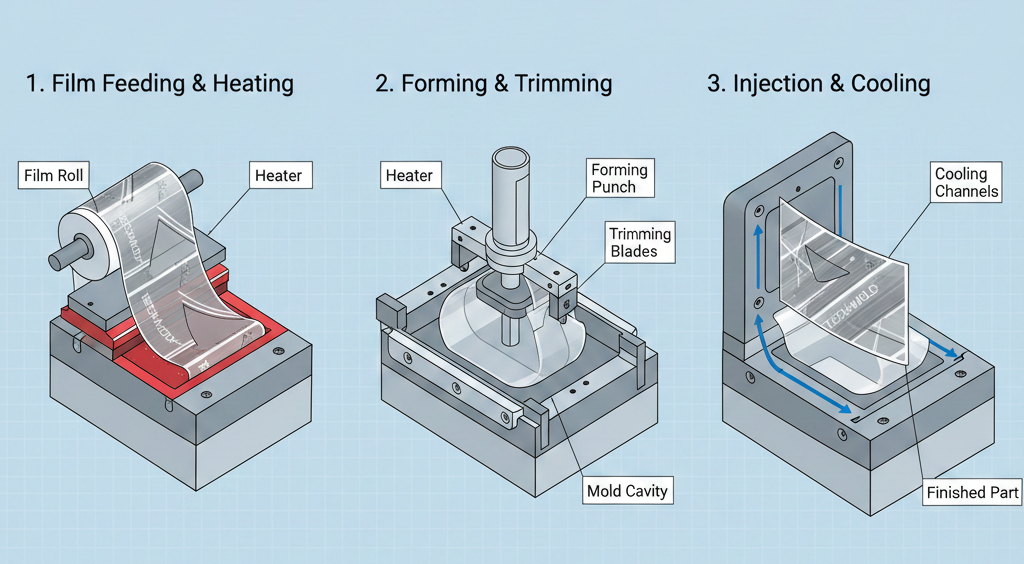
In-mold decoration (IMD) integrates a pre-printed film into the molding process. Instead of applying graphics after molding, IMD embeds them during part formation. This approach removes secondary operations and improves repeatability.
More importantly, IMD connects surface graphics directly to the molded structure. Because of this integration, manufacturers gain tighter control over dimensions and appearance. However, this advantage depends heavily on accurate film positioning inside the mold.
Why Film Positioning Defines Accuracy in IMD
Film positioning determines where graphics land and how the part forms. When the film shifts, even slightly, visual and dimensional errors appear. These errors include distorted icons, misaligned symbols, and uneven wall thickness.
Precise film positioning keeps the film stable during injection. It also ensures that graphics match the molded geometry. As a result, parts meet design intent without adjustment or rework.
At Linepro, engineers treat film positioning as a core process variable. They design tooling and fixtures to control it consistently.
Film Positioning in Film Insert Molding
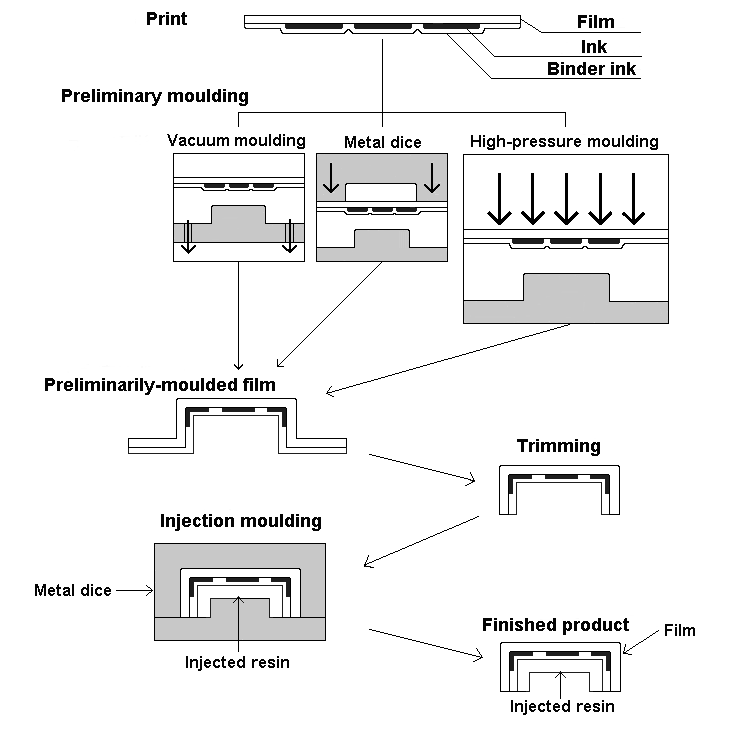
Film insert molding describes how the pre-printed film enters the mold cavity. During this step, the film must stay flat, aligned, and tension-free.
To achieve this, Linepro uses:
- Accurate film locating features
- Controlled clamping pressure
- Stable film support systems
These controls prevent film movement before injection. They also protect graphics from stretching or distortion. As a result, the film behaves as a fixed reference during molding.
Overmolding and Dimensional Control
During overmolding, molten resin flows behind the positioned film. This step defines the final part shape. If the film remains stable, resin fills the cavity evenly.
Even resin flow improves dimensional accuracy. It also reduces internal stress. In contrast, poor film positioning disrupts flow and creates uneven cooling.
By controlling film position, Linepro ensures predictable overmolding behavior. This consistency improves part quality and reduces scrap.
Film Positioning for Multi-Cavity Mold Consistency
High-volume production often uses a multi-cavity mold. While efficient, this setup increases the risk of variation. Small differences between cavities can cause visible defects.
Consistent film positioning solves this issue. When each cavity receives the film in the same way, every part forms uniformly. Graphics align the same way across all cavities.
Because of this control, Linepro delivers uniform parts even in large production runs.
Dimensional Stability with Film Integration
Dimensional stability with film improves when the film supports the part during cooling. A well-positioned film limits material movement and balances shrinkage.
This benefit matters most in:
- Thin-wall components
- Large flat surfaces
- Precision electronic housings
Instead of introducing stress, the film reinforces the structure. This reinforcement helps the part retain its intended shape.
Warpage Control with Film Positioning
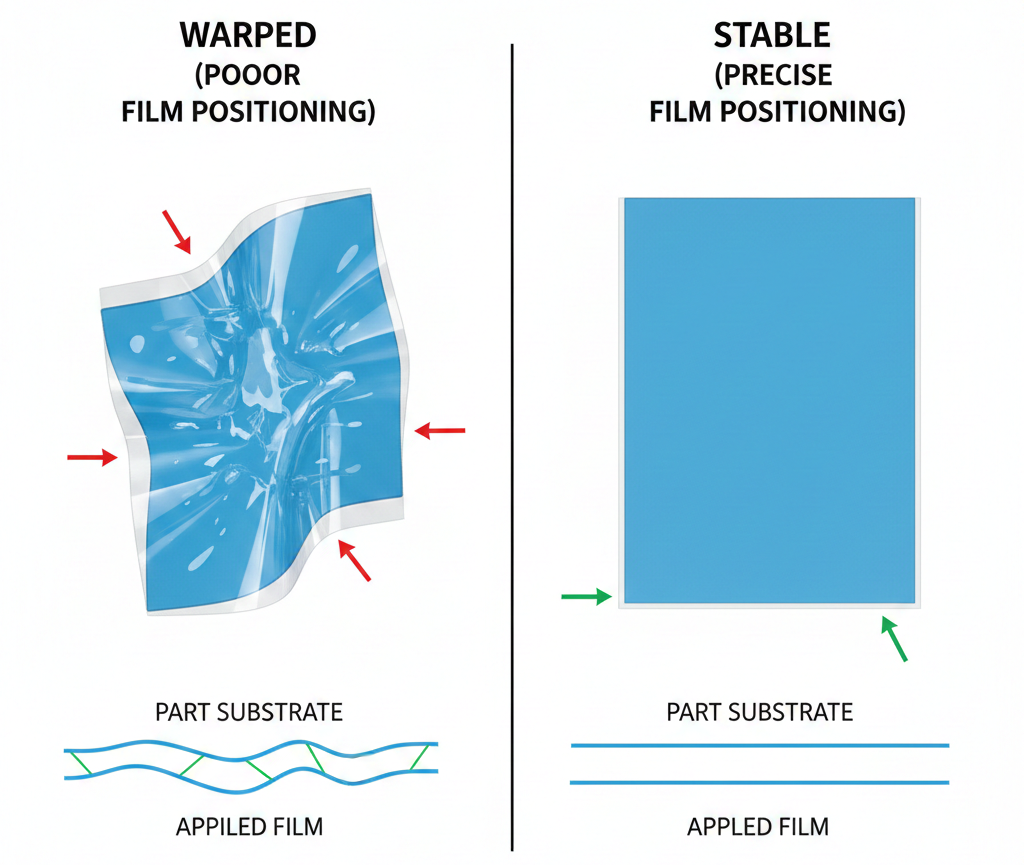
Warpage control with film remains one of the strongest advantages of IMD. It typically occurs when cooling happens unevenly, causing parts to deform.
Proper film positioning improves heat distribution. It also balances shrinkage across the part. These effects reduce internal stress.
Linepro analyzes film placement early in the design phase. This analysis helps prevent warpage before tooling begins.
Resin Flow Simulation with Film Insert
Engineers use resin flow simulation with film insert to predict molding behavior. These simulations show how resin moves around the film.
Simulation helps teams:
- Balance flow paths
- Optimize gate locations
- Reduce pressure variation
By validating film positioning digitally, Linepro avoids trial-and-error adjustments. This approach saves time and improves first-run success.
Pre-Printed Film and Graphic Consistency
High-quality pre-printed film delivers sharp graphics. However, printing quality alone is not enough. Without accurate film positioning, even perfect prints fail.
Correct positioning keeps graphics aligned with molded features. It also prevents stretching and color distortion. As a result, every part looks the same across batches.
High Yield Rate Through Process Control
All these improvements lead to one key result: a high yield rate.
Stable film positioning reduces defects. It also limits rework and inspection time. Manufacturers see more acceptable parts per cycle.
At Linepro, yield improves because accuracy is built into the process—not checked at the end.
Why Linepro Excels in IMD Manufacturing
Linepro approaches IMD as a precision manufacturing system. Sits at the center of that system.
By combining film insert molding, overmolding control, multi-cavity consistency, and simulation-driven design, Linepro delivers reliable IMD components for demanding applications.
