
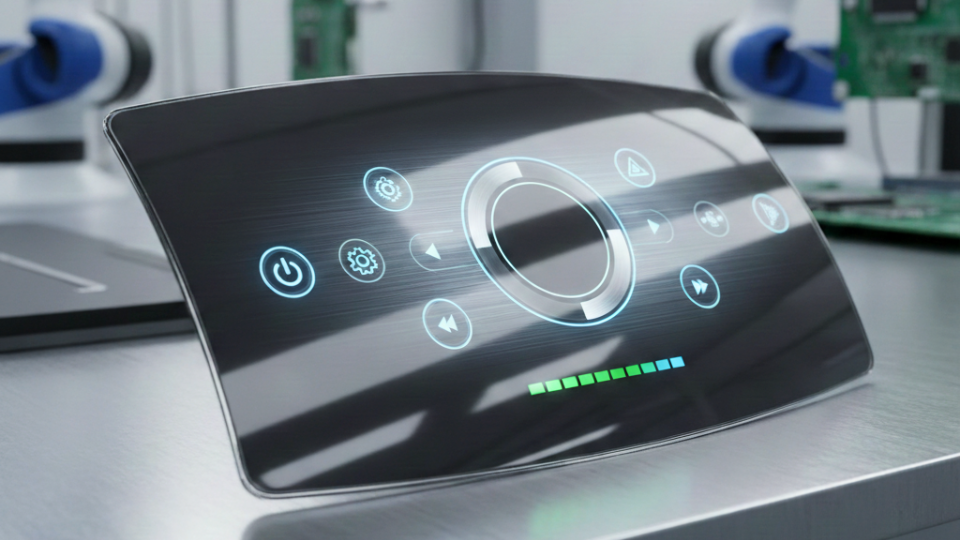
In-mold decoration components are transforming how industrial and consumer electronics are designed, manufactured, and used. As electronic devices demand slimmer profiles, premium aesthetics, and long service life, manufacturers must move beyond traditional surface printing and painting. Therefore, advanced solutions such as in-mold decoration (IMD) have become essential.
By integrating graphics and functional layers directly into molded parts, in-mold technology delivers superior durability, visual consistency, and design freedom. As a result, IMD is now widely adopted in 3C products (consumer electronics) housing, industrial control interfaces, and modern touch-enabled systems.
Understanding In-Mold Decoration Technology
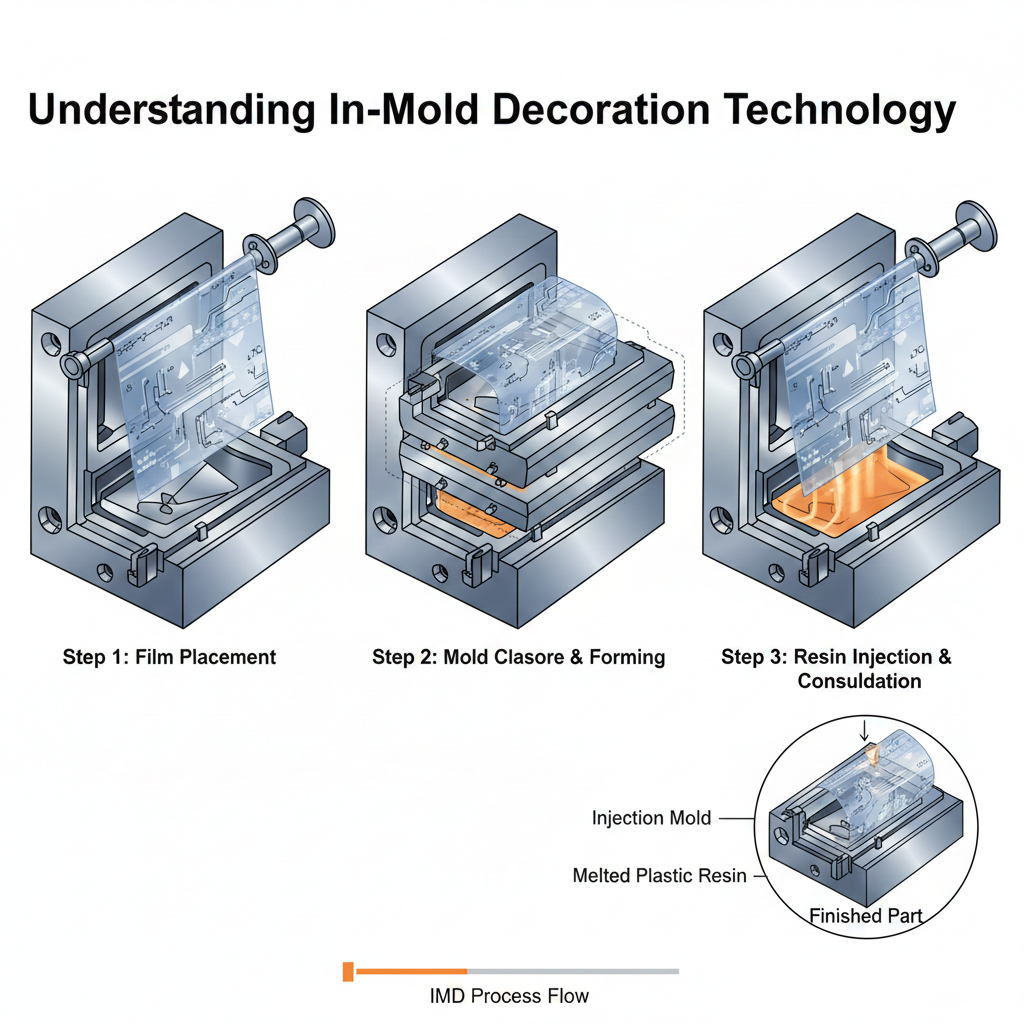
In-mold decoration (IMD) is a manufacturing process where a pre-printed film is placed inside the injection mold before plastic molding. During molding, the film permanently bonds with the plastic component.
Because of this, decoration becomes an integral part of the product rather than a surface layer.
Moreover, film insert molding eliminates the need for secondary printing or painting. Consequently, manufacturers achieve higher consistency, reduced processing time, and improved product reliability.
Why In-Mold Decoration Components Are Ideal for Electronics
Electronic components face constant mechanical wear, chemical exposure, and frequent user interaction. In contrast, conventional decoration methods degrade over time. IMD addresses these challenges directly.
Let us examine the key benefits in detail:
1. Excellent Scratch Resistance for High-Use Interfaces
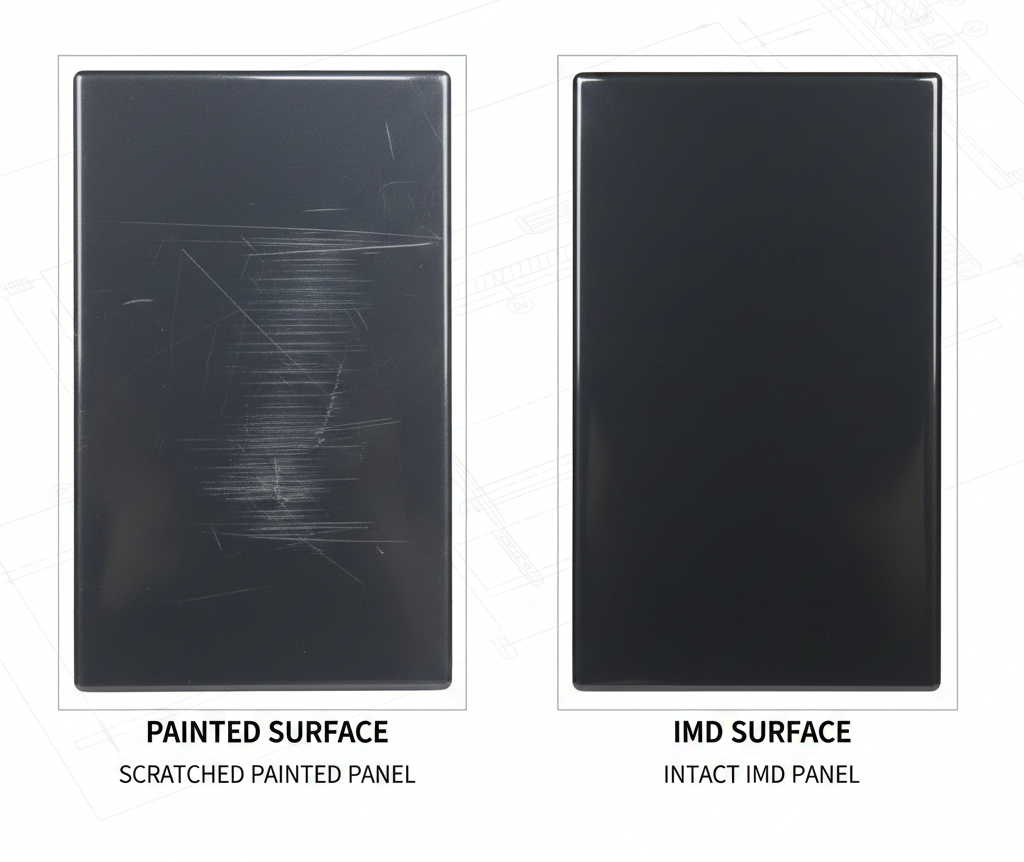
First and foremost, in-mold decoration components offer outstanding scratch resistance. Since graphics are protected beneath a hard-coated film, they do not wear off easily.
Therefore, IMD is highly suitable for:
- Touch control panels
- Capacitive touch keys / touch switches
- Consumer electronics interfaces
- Industrial HMI panels
In contrast to painted surfaces, IMD components maintain a premium appearance even after prolonged use.
2. Strong Chemical Resistance in Harsh Conditions
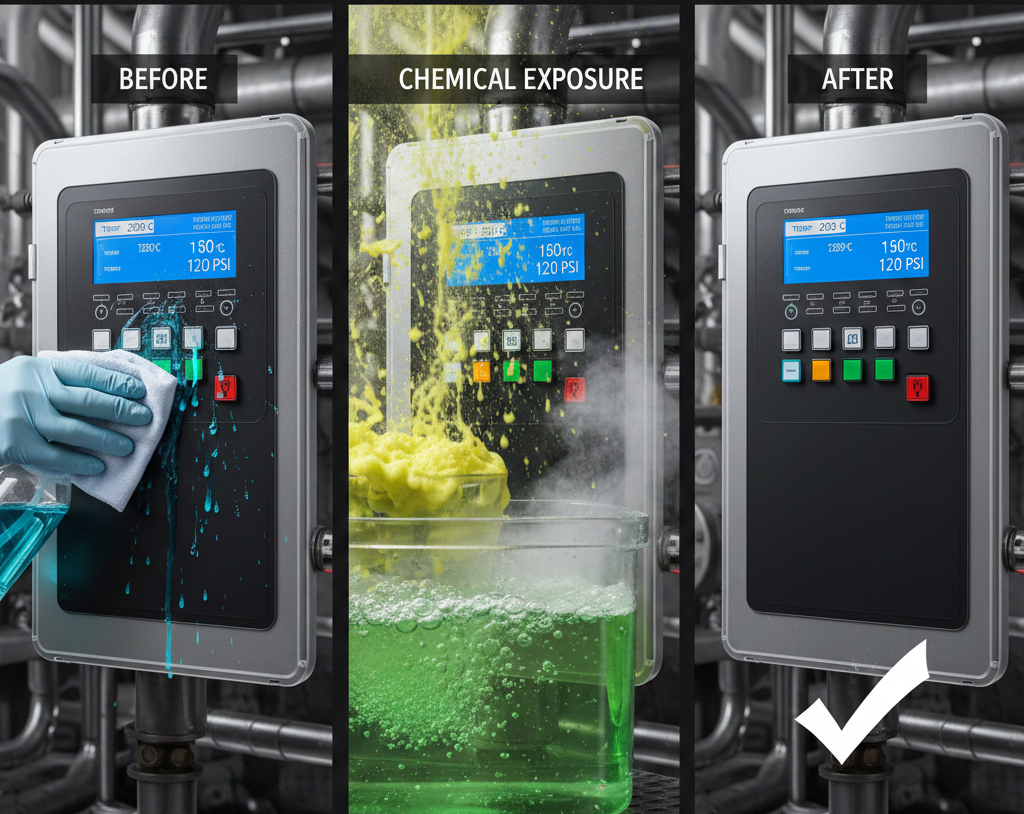
Industrial and consumer electronics are often exposed to cleaning agents, oils, and moisture. Unfortunately, surface-printed graphics fail under such conditions.
However, in-mold technology provides superior chemical resistance.
Because the decoration layer is sealed inside the molded part, it remains unaffected by harsh chemicals. As a result, IMD components are ideal for medical devices, industrial machinery, automotive electronics, and outdoor equipment.
3. Long-Term Color Stability without Fading
Color fading directly impacts brand perception. Traditional printing methods struggle to maintain visual consistency over time.
In comparison, in-mold decoration components ensure excellent long-term color stability.
Since the film is embedded within the plastic, graphics are protected from UV radiation, heat, and abrasion. Consequently, colors remain vibrant throughout the product’s lifecycle. This benefit is especially valuable for 3C products (consumer electronics) housing, where aesthetics influence purchasing decisions.
4. Seamless Integration of Touch Control Panels
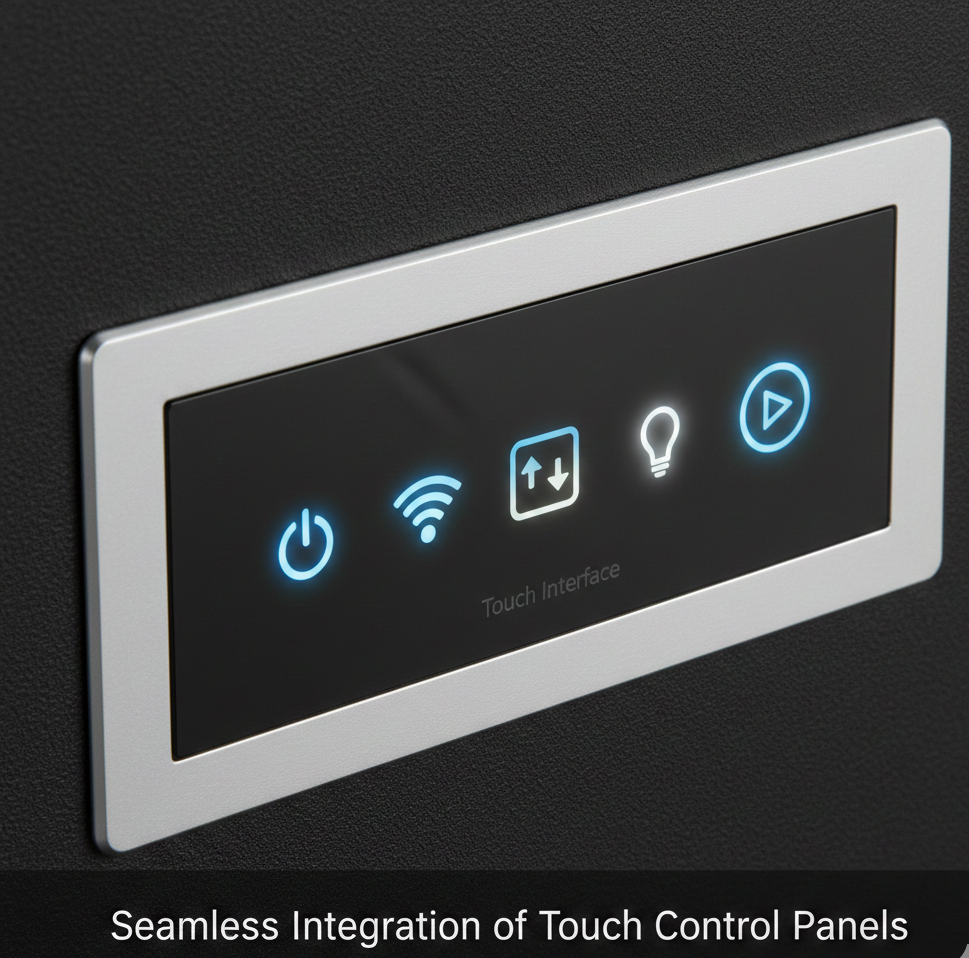
Modern electronics require sleek and intuitive interfaces. Fortunately, IMD supports seamless integration of touch control panels.
Using film insert molding, printed symbols align precisely with sensors and circuits. Therefore, manufacturers achieve:
- Accurate touch response
- Perfect symbol alignment
- Flat, edge-free surfaces
As a result, capacitive touch keys / touch switches perform reliably while maintaining a clean, modern appearance.
5. Greater Design Flexibility for Innovative Products
In addition to durability, IMD offers unmatched design flexibility.
Designers can incorporate:
- Complex graphics
- Metallic or matte finishes
- Backlit icons
- Curved and three-dimensional shapes
Because decoration occurs during molding, even intricate designs remain consistent. Therefore, IMD enables creative freedom without compromising production quality.
6. Reduced Manufacturing Steps and Improved Efficiency
Traditional decoration involves multiple post-molding processes. These steps increase cost and introduce quality variations.
However, in-mold decoration (IMD) combines decoration and molding into one process.
As a result:
- Production cycles are shorter
- Scrap rates are reduced
- Quality consistency improves
- High-volume manufacturing becomes more efficient
Consequently, electronics manufacturers benefit from faster time-to-market and lower operational costs.
7. Reliable Performance in 3C Products Housing
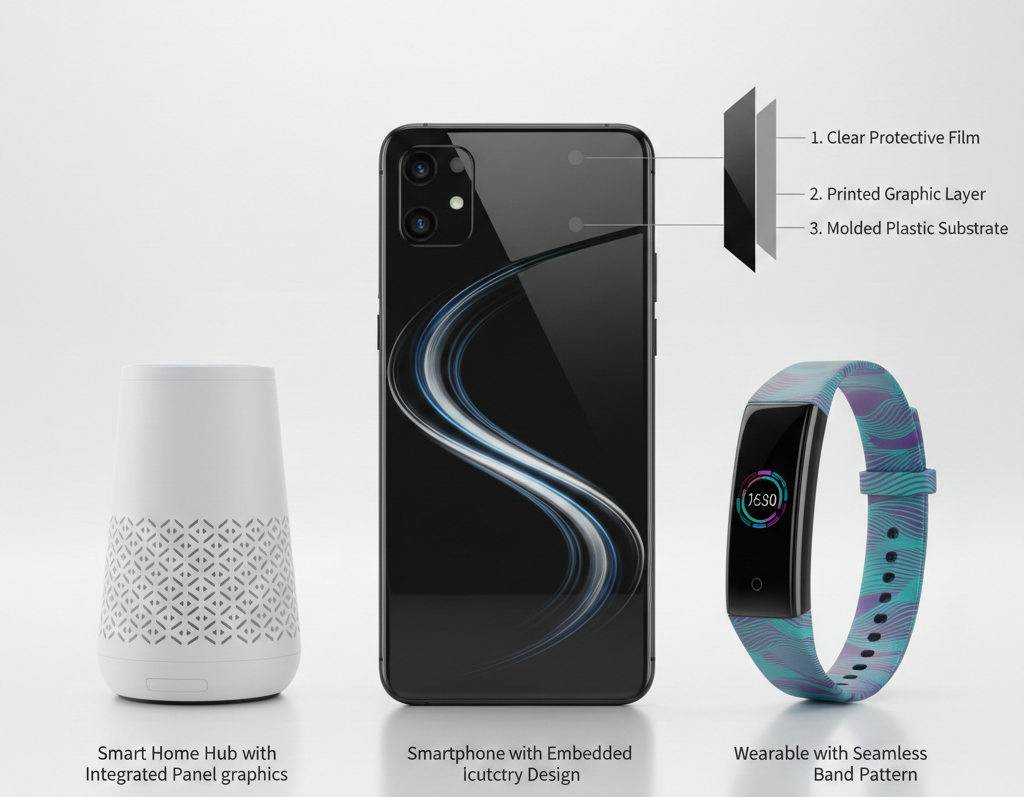
3C products (consumer electronics) housing must meet both functional and aesthetic demands. IMD fulfills these requirements effectively.
IMD housings provide:
- Thin-wall construction
- Smooth, premium finishes
- Integrated branding and symbols
- High resistance to daily wear
Therefore, IMD is widely used in smartphones, wearables, home appliances, and smart devices.
8. Extended Product Life and Sustainability Benefits
Durability leads to sustainability. Since in-mold decoration components resist wear and fading, products last longer.
Additionally, eliminating secondary painting processes reduces material waste and VOC emissions. As a result, in-mold technology supports environmentally responsible manufacturing practices.
Why Linepro?
At Linepro, we specialize in high-performance in-mold decoration components tailored for industrial and consumer electronics. Our expertise in film insert molding ensures precision, durability, and repeatable quality.
We deliver:
- Custom touch control panels
- Advanced capacitive touch keys
- Durable electronic housings
- Design-focused IMD solutions
By combining engineering excellence with innovative materials, we help customers create reliable and visually superior electronic products.
Conclusion
In today’s electronics market, performance and aesthetics must coexist. In-mold decoration components make this possible.
With benefits such as scratch resistance, chemical resistance, long-term color stability, and superior design flexibility, IMD has become the preferred solution for industrial and consumer electronics. From touch interfaces to 3C products housing, in-mold technology continues to redefine product quality and durability.
For manufacturers seeking future-ready solutions, IMD is the smart choice.
