
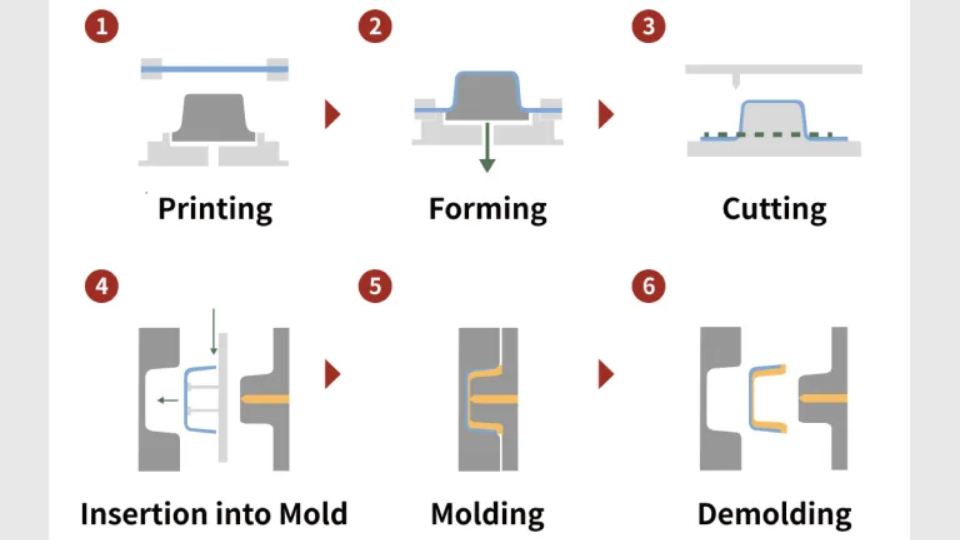
In-mold decoration (IMD) is an advanced manufacturing process that combines decoration and molding into a single, efficient step. Instead of applying graphics after molding, IMD integrates the decoration directly into the plastic part during molding. As a result, manufacturers achieve durable, high-quality, and visually appealing components.
Today, industries increasingly adopt in-mold decoration (IMD) because it improves product reliability, enhances design freedom, and reduces production complexity. At Polar Printed Electronics, we use IMD to deliver robust decorative and functional solutions for modern industrial and electronic applications.
What Is In-mold Decoration (IMD)?
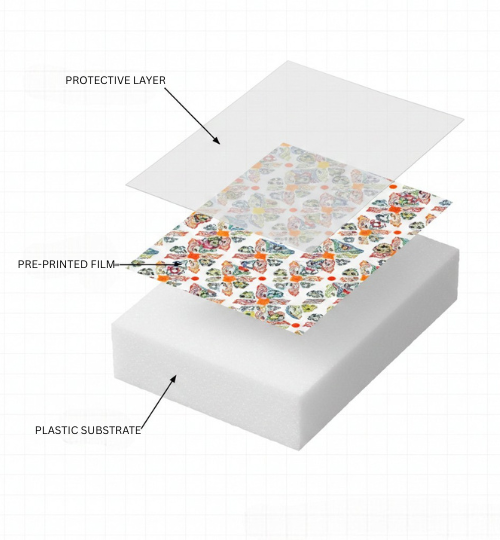
In-mold decoration (IMD) is a process where a pre-printed film is placed inside a mold before plastic injection. During molding, molten resin fuses with the film, permanently embedding graphics, textures, and functional layers into the product surface.
Unlike traditional printing or painting, in-mold decoration (IMD) eliminates post-processing steps. Therefore, manufacturers achieve consistent quality, lower rejection rates, and improved production efficiency. Moreover, IMD ensures long-lasting performance even in harsh operating conditions.
How In-mold Decoration (IMD) Works: Step-by-Step Process

To fully understand the value of in-mold decoration (IMD), it is important to examine the process in detail.
1. IMD Film Printing
First, manufacturers prepare an IMD film, typically made from PET or polycarbonate. Using precision printing methods, they print graphics, symbols, textures, or conductive patterns onto the film. Additionally, protective layers enhance scratch resistance and UV stability.
2. Film Thermoforming
Next, the printed film undergoes thermoforming. This step shapes the flat film into a three-dimensional form that matches the mold cavity. Consequently, the film fits accurately during molding.
3. Film Insert Placement
After forming, operators place the pre-printed film inside the injection mold. At this stage, precise positioning is essential. Otherwise, misalignment may affect the final appearance.
4. Injection Molding and Overmolding
Then, molten plastic flows into the mold and bonds with the film through overmolding. Because decoration occurs inside the mold, this method supports true one-step decoration.
5. Finished Part Ejection
Finally, the molded part cools and ejects from the mold. The decoration becomes an integral part of the component rather than a surface layer.
Key Benefits
IMD offers several advantages that clearly outperform traditional decoration methods.
Excellent Scratch Resistance
Because graphics sit beneath the plastic surface, IMD products offer superior scratch resistance. Even with frequent handling, the design remains intact.
Long-term Color Stability
Since the decoration stays protected inside the molded part, IMD ensures long-term color stability. Therefore, products resist fading caused by UV light, chemicals, or cleaning agents.
One-step Decoration Efficiency
IMD combines decoration and molding into a single operation. As a result, manufacturers eliminate secondary processes such as painting or labeling, which reduces production time and cost.
High Design Flexibility
Supports complex shapes, fine details, and premium surface finishes. Moreover, 3D in-mold decoration enables seamless graphics across curved and contoured surfaces.
Lightweight and Durable Components
Because IMD uses thin films instead of thick coatings, it produces lightweight yet mechanically strong components.
In-mold Decoration (IMD) vs Conventional Decoration Methods
Compared to screen printing, painting, or adhesive labels, IMD delivers far better durability. Traditional methods often peel, crack, or fade over time. In contrast, IMD embeds decoration permanently within the molded plastic.
Additionally, conventional methods require multiple manufacturing steps. However, IMD simplifies production by integrating decoration into the molding process itself.
Applications
In-mold decoration (IMD) supports a wide range of industries. Because of its durability and design versatility, it fits both functional and aesthetic requirements.
Consumer Electronics
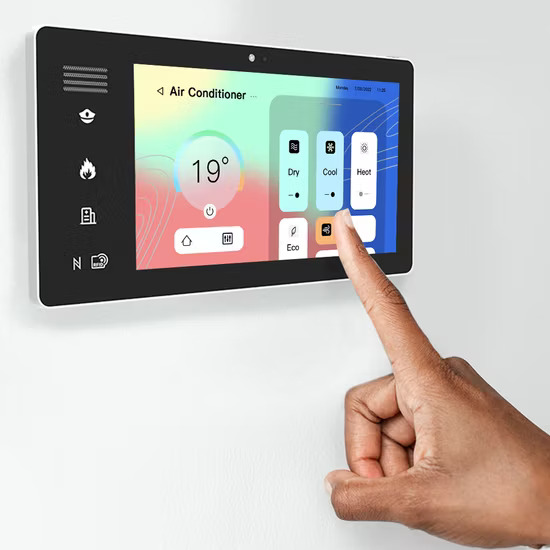
Smartphones, wearables, and remote controls use IMD for seamless graphics and premium finishes. Many touch control panels integrate capacitive sensors directly into IMD films.
Automotive Interiors
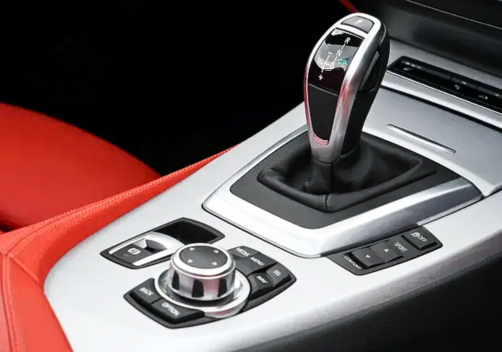
Automotive dashboards, center consoles, and switch panels benefit from IMD’s resistance to heat, abrasion, and UV exposure.
Home Appliances
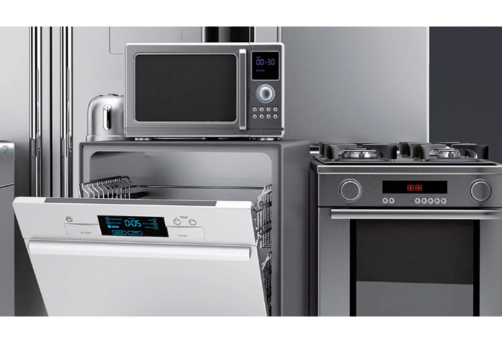
Washing machines, refrigerators, and microwave ovens rely on IMD panels for easy cleaning and long-lasting icons.
Industrial and Medical Devices
Control panels and housings require chemical resistance and clarity. Therefore, IMD ensures reliable performance in demanding environments.
In-mold Decoration (IMD) in Printed Electronics
A critical role in modern printed electronics. Manufacturers can integrate conductive inks, touch keys, and backlit symbols directly into the IMD film.
As a result, designers reduce component count and improve reliability. At Polar Printed Electronics, we combine IMD with printed electronics to create intelligent, space-saving, and high-performance interfaces.
Why Choose Polar Printed Electronics for In-mold Decoration (IMD)?
Polar Printed Electronics provides end-to-end expertise in in-mold decoration (IMD). We focus on:
Because of our technical capabilities, we help customers achieve reliable, visually refined, and cost-effective IMD solutions.
Conclusion
In-mold decoration (IMD) revolutionizes how manufacturers design and produce plastic components. By embedding decoration during molding, IMD delivers unmatched durability, efficiency, and design flexibility.
As product designs become smarter and more compact, in-mold decoration (IMD) continues to grow in importance. With proven expertise, Polar Printed Electronics stands ready to support next-generation IMD applications across industries.
