
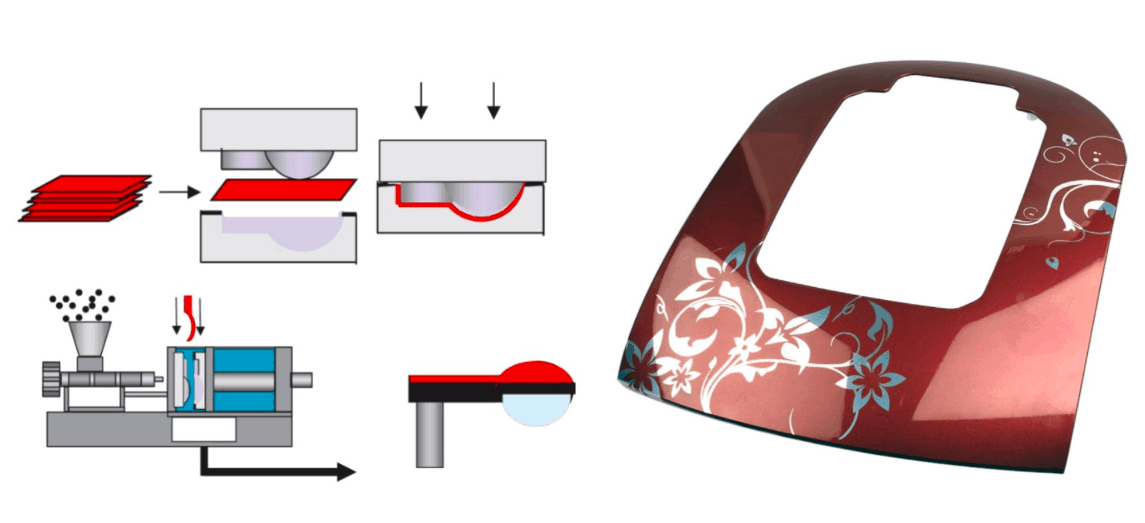
Modern manufacturing demands speed, durability, and superior aesthetics. As a result, many industries now rely on in-mold technology to meet these expectations. This advanced process combines decoration and molding into a single manufacturing step. Consequently, manufacturers reduce costs while improving product quality.
At Polar Printed Electronics, in-mold technology plays a vital role in producing durable, high-performance components for printed electronics. In particular, in-mold decoration (IMD) and in-mold labeling (IML) enable seamless integration of graphics, branding, and functional layers. This blog explains how these processes work, their advantages, and why they matter in modern manufacturing.
What Is In-Mold Technology?
In-mold technology integrates a decorative or functional film directly into a plastic component during molding. Instead of applying labels or graphics after molding, manufacturers place a pre-printed film inside the mold before injection begins. As a result, the decoration bonds permanently with the plastic surface.
Moreover, this approach eliminates secondary operations such as screen printing or adhesive labeling. Therefore, manufacturers achieve consistent quality, faster production cycles, and long-lasting finishes. Two major methods dominate this process: in-mold decoration (IMD) and in-mold labeling (IML).
Understanding In-Mold Decoration (IMD)
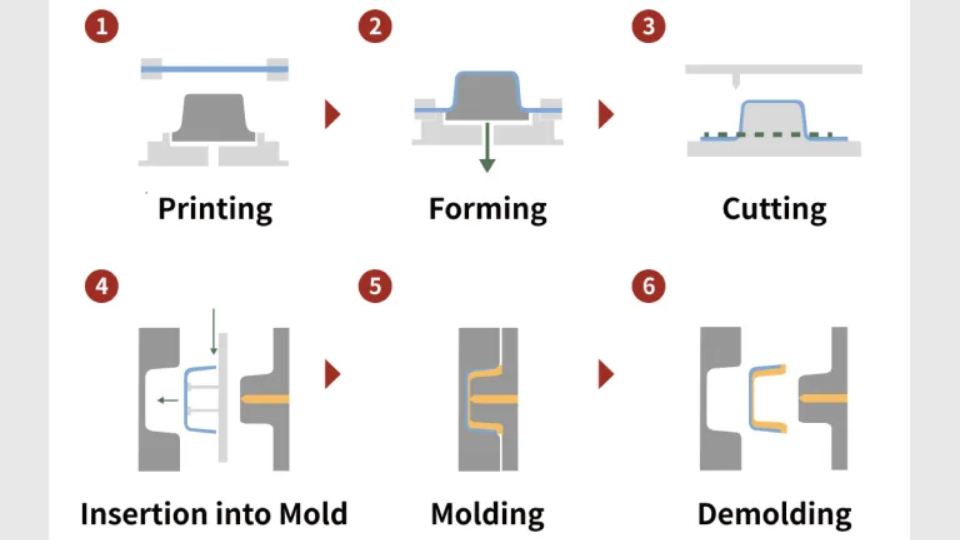
In-mold decoration (IMD) enhances product surfaces by embedding graphics, textures, or functional layers into molded parts. Manufacturers typically use an IMD film that carries printed designs, conductive traces, or icons.
IMD Manufacturing Process
First, manufacturers print high-resolution graphics or functional elements onto a thin film. Next, automated systems place the film inside the mold using precise film positioning / registration. Then, the injection molding machine injects molten plastic behind the film. Finally, the plastic and film fuse into a single component as the part cools.
As a result, IMD produces components with excellent scratch resistance, chemical resistance, and visual clarity. Moreover, designers gain greater freedom because IMD supports complex shapes, textures, and backlit graphics.
What Is In-Mold Labeling (IML)?
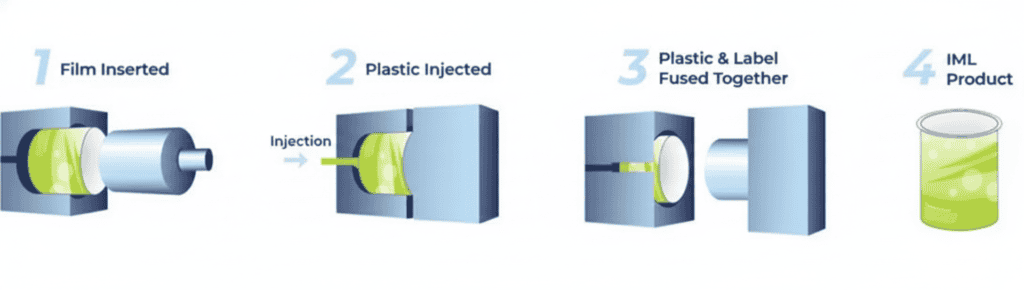
While IMD focuses on decorative and functional surfaces, in-mold labeling (IML) concentrates on permanent labeling. In this process, manufacturers insert an IML film label into the mold before injection. During molding, the label bonds directly to the plastic part.
Therefore, IML eliminates peeling, bubbling, or fading that often occurs with traditional labels. Additionally, the process improves hygiene and durability, which makes it ideal for packaging, medical devices, and consumer products.
Although IML originated in packaging, manufacturers now apply it to electronics housings and industrial components that demand high-quality branding and long service life.
Film Insert Molding: The Core of IMD and IML
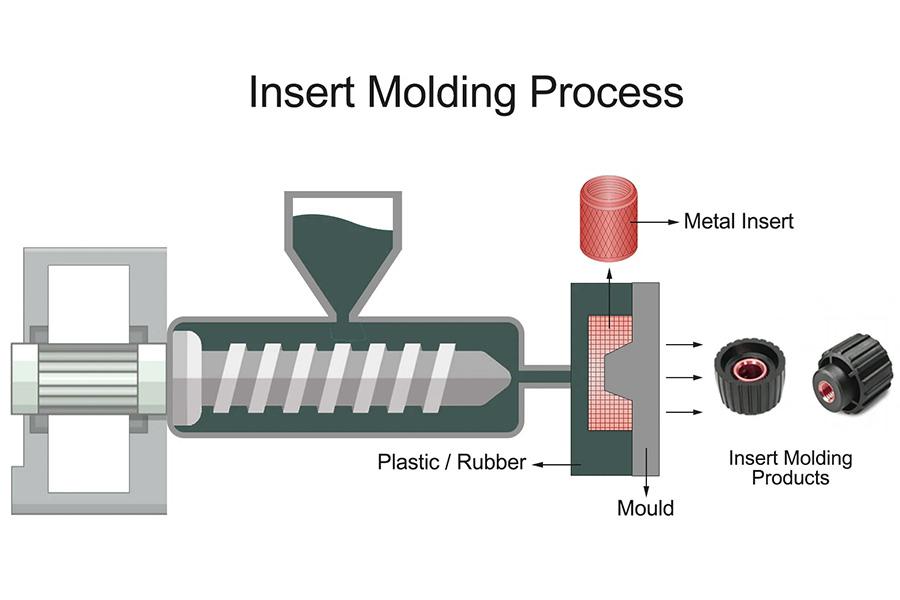
Both IMD and IML rely on film insert molding. This technique ensures that the film aligns perfectly inside the mold before injection. Consequently, accurate placement becomes critical, especially for printed electronics.
Moreover, advanced film insert molding systems use robotics and vision systems to maintain consistent registration. As a result, manufacturers achieve repeatable quality even in high-volume production.
Injection Molding Decoration and Overmolding
Injection molding decoration allows manufacturers to combine structure and surface finish in one cycle. Furthermore, many applications use overmolding to add protective or functional layers over decorated films.
For example, overmolding improves impact resistance and seals sensitive printed electronics. Therefore, manufacturers extend product lifespan while maintaining a premium appearance.
Key Advantages of In-Mold Technology
In-mold technology delivers several measurable benefits across industries.
1. One-Step Decoration
Manufacturers complete decoration during molding. As a result, they eliminate post-processing steps and reduce labor costs.
2. Superior Durability
The decoration becomes part of the molded surface. Therefore, it resists scratches, chemicals, and environmental stress.
3. Cost Efficiency
By removing secondary operations, manufacturers lower production time and tooling expenses. Consequently, overall manufacturing costs decrease.
4. Design Flexibility
Designers can integrate textures, colors, and functional elements into complex 3D shapes. Moreover, IMD supports backlit symbols and transparent windows.
5. Integration with Printed Electronics
IMD films can carry conductive inks, sensors, and circuits. As a result, manufacturers create smart interfaces without additional assemblies.
Applications

In-mold technology strongly supports the growing demand for compact and intelligent products. At Polar Printed Electronics, IMD and IML enable seamless integration of electronics and design.
Common applications include:
- Touch control panels with printed circuitry
- User interface bezels with backlit icons
- Automotive interior trims with embedded electronics
- Wearable and industrial device housings
Because these components combine form and function, manufacturers reduce assembly complexity while improving reliability.
Critical Design and Manufacturing Considerations
Successful implementation requires careful planning.
First, manufacturers must ensure accurate film positioning / registration. Even minor misalignment can affect both aesthetics and circuit performance.
Second, material compatibility between the film and plastic substrate remains essential. Therefore, engineers must select materials that bond well during molding.
Finally, collaboration between design and manufacturing teams improves outcomes. Early design optimization ensures smoother production and higher yields.
Why Polar Printed Electronics Uses In-Mold Technology
Polar Printed Electronics adopts in-mold technology to deliver advanced printed electronic solutions with consistent quality. By combining IMD, IML, and film insert molding, Polar reduces complexity while enhancing product durability.
Moreover, this approach supports scalable manufacturing for both decorative and functional components. As a result, customers receive reliable, cost-effective, and innovative products.
Conclusion
In conclusion, in-mold technology transforms modern manufacturing by merging decoration and molding into a single process. Through in-mold decoration (IMD) and in-mold labeling (IML), manufacturers achieve durable finishes, lower costs, and enhanced functionality.
By leveraging film insert molding, injection molding decoration, and advanced IMD and IML films, Polar Printed Electronics continues to deliver next-generation printed electronic solutions. Consequently, in-mold technology remains a key driver of innovation in smart manufacturing.
