
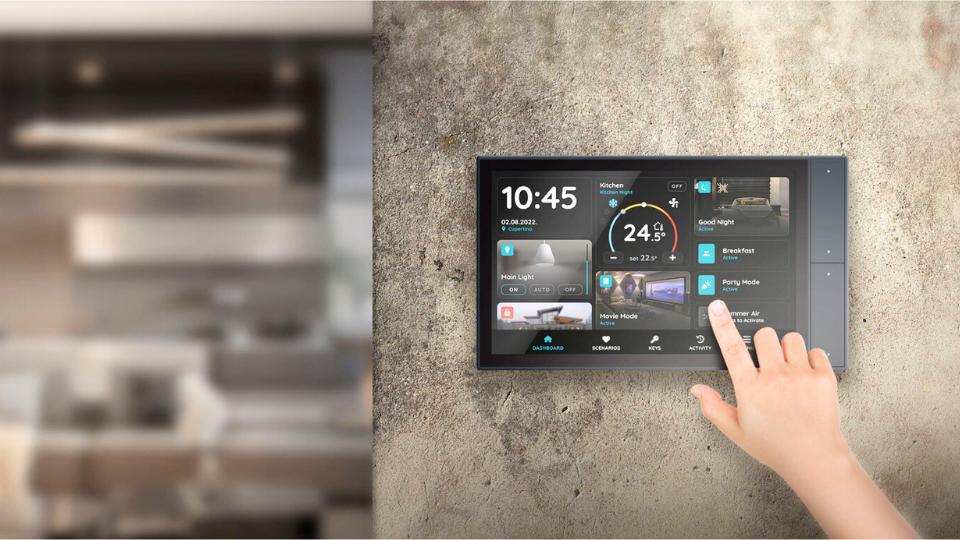
Touch control panels are essential in modern electronic products. They allow users to control machines quickly and easily. At the same time, these panels face constant physical contact. Because of this, durability has become a key design requirement.
Repeated touch, harsh chemicals, and frequent cleaning damage conventional panels. However, in-mold decoration (IMD) offers a long-lasting solution. As a result, manufacturers can create touch panels that retain both function and appearance for years. At Polar Printed Electronics, IMD plays a vital role in advanced human–machine interface solutions.
Importance of Touch Control Panels in HMI Design
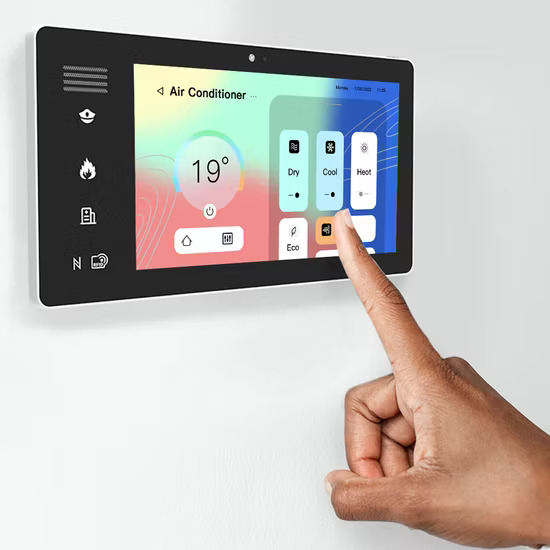
Touch control panels sit at the center of every human–machine interface (HMI). They replace mechanical buttons with sealed, flat surfaces. Therefore, they improve usability and hygiene.
Traditional touch panels often rely on printed overlays or labels. Over time, these layers wear out. As a result, symbols fade and touch accuracy drops.
For this reason, designers now prefer technologies that protect graphics and electronics together. IMD addresses this need effectively.
What Is In-Mold Decoration (IMD)?
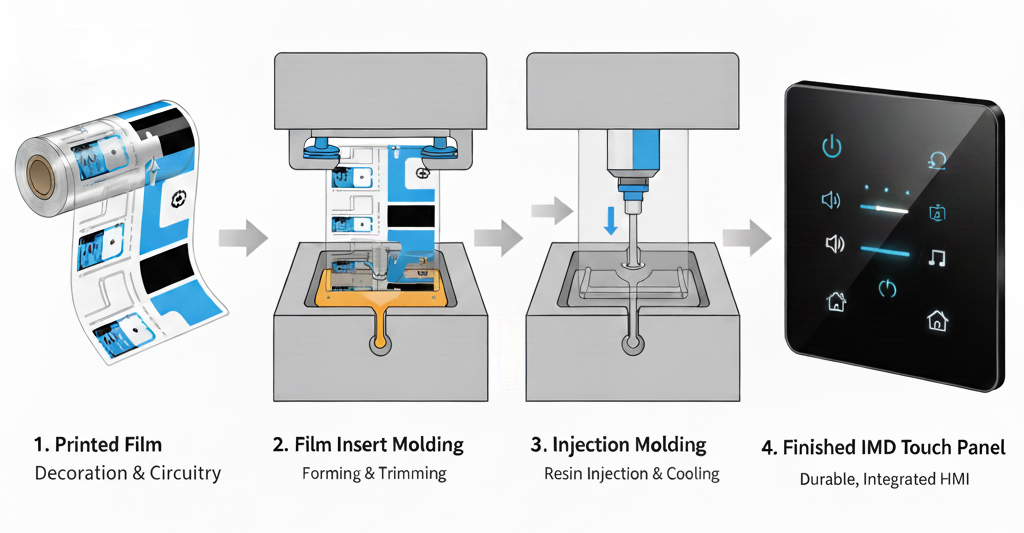
In-mold decoration (IMD) is an advanced in-mold technology. In this process, a printed film is placed inside the injection mold. Then, molten plastic bonds with the film during molding.
As a result, the decoration becomes part of the final component. Because the graphics sit beneath the surface, external damage cannot reach them. IMD commonly uses film insert molding, which ensures accurate alignment of symbols and touch zones.
Why IMD Is Ideal for Long-Life Touch Control Panels
IMD solves many problems found in conventional panel designs. More importantly, it improves both durability and reliability.
Improved Wear Resistance for High-Use Panels
Touch control panels experience repeated finger contact. Over time, friction causes surface wear.
IMD protects graphics under a solid plastic layer. Therefore, panels show excellent wear resistance. As a result, icons remain readable even after millions of touches.
Strong Scratch Resistance without Extra Layers
Scratches reduce both clarity and appearance. However, traditional coatings wear off quickly.
IMD uses the molded surface itself for protection. Because of this, panels offer high scratch resistance. In addition, the surface stays smooth throughout the product life.
Chemical Resistance for Industrial and Medical Use
Many environments expose control panels to oils, solvents, and cleaners. If graphics remain exposed, damage occurs quickly.
IMD fully seals printed layers inside the molded structure. As a result, touch control panels show strong chemical resistance. Therefore, they perform reliably in industrial and medical applications.
Long-Term Color Stability
Color fading affects both usability and brand image. Unfortunately, UV light and abrasion cause this problem in standard panels.
IMD protects graphics from direct exposure. Because of this, panels achieve excellent long-term color stability. Even after years of use, symbols remain clear and consistent.
Supporting Capacitive Touch Keys and Touch Switches
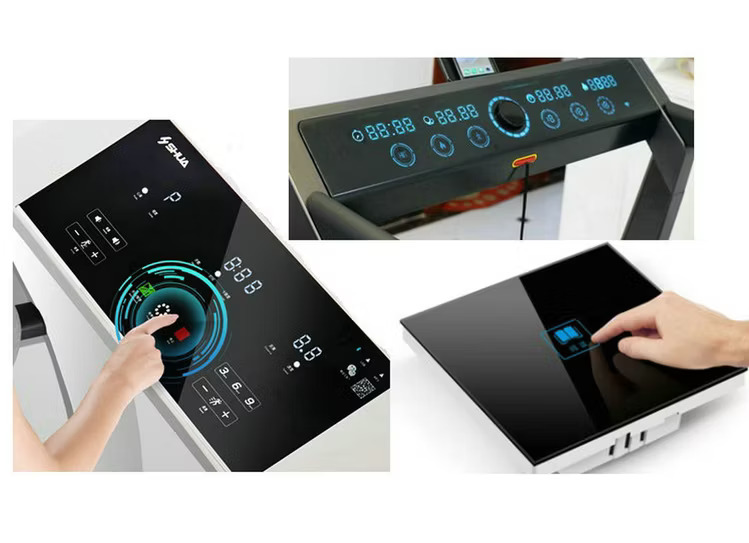
Modern capacitive touch keys / touch switches require precise construction. Any variation affects performance.
IMD enables:
- Stable film thickness
- Accurate symbol placement
- Consistent dielectric properties
As a result, touch sensitivity remains uniform. Moreover, false activations reduce significantly. Polar Printed Electronics designs IMD panels to integrate seamlessly with printed electronics.
Seamless Integration of HMI Components
IMD simplifies human–machine interface (HMI) design. Instead of assembling multiple layers, IMD integrates everything into one part.
This integration includes:
- Decorative graphics
- Protective surface
- Touch interface layout
Because of this, part count decreases. As a result, reliability improves and assembly errors drop.
Design Freedom Enabled by Film Insert Molding
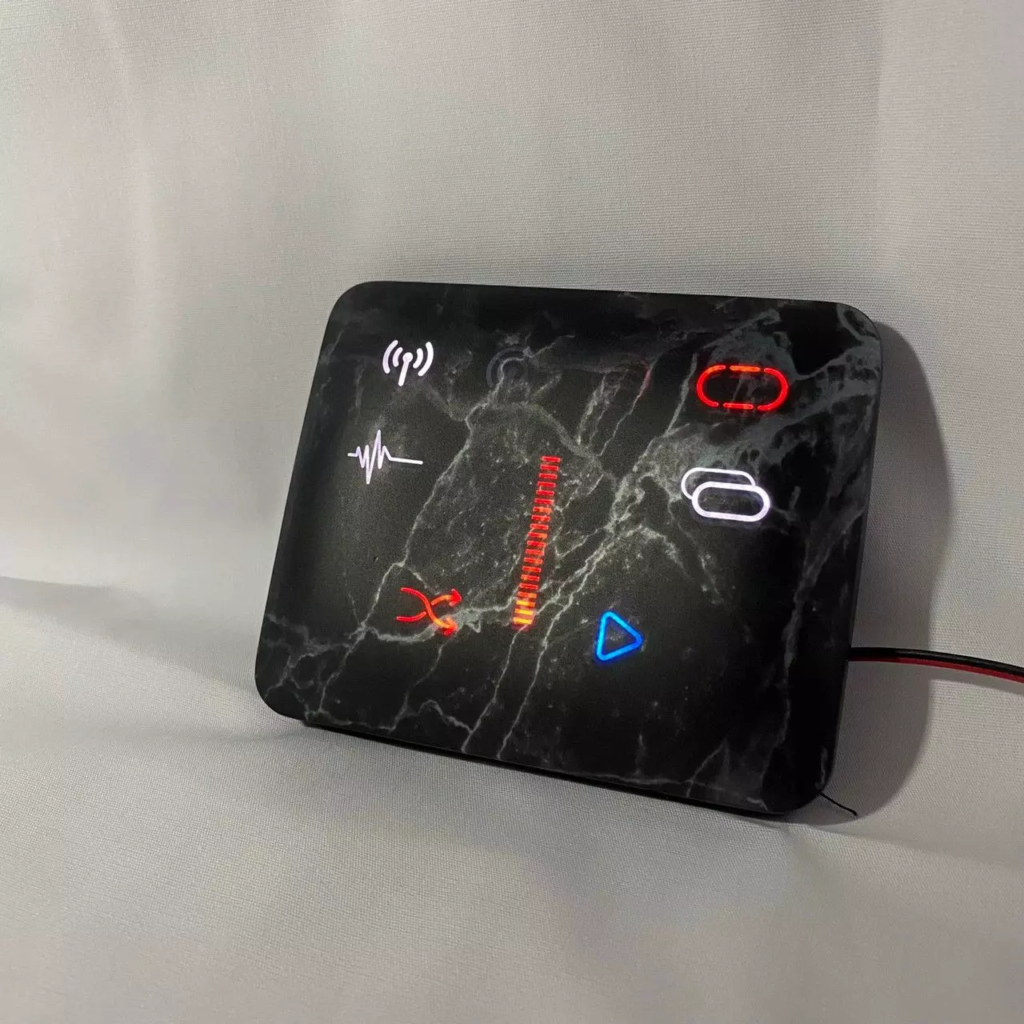
Film insert molding allows complex shapes and modern aesthetics. Therefore, designers gain more creative freedom.
With IMD, manufacturers can design:
- Curved touch control panels
- Backlit symbols
- Multi-zone touch layouts
Since the film conforms to the mold, alignment remains accurate after molding.
IMD vs. Traditional Touch Control Panels
| Feature | Traditional Panels | IMD Panels |
| Wear resistance | Low | High |
| Scratch resistance | Moderate | Excellent |
| Chemical resistance | Limited | Strong |
| Color stability | Poor | Long-term |
| Design flexibility | Limited | High |
Clearly, IMD offers a superior long-term solution.
Common Applications of IMD Touch Control Panels
- Industrial automation
- Home appliances
- Automotive interiors
- Medical equipment
- Smart and IoT devices
In all cases, durability and reliability remain critical.
Why Polar Printed Electronics Uses IMD
At Polar Printed Electronics, IMD supports robust and scalable production. Moreover, it aligns with printed electronics integration.
The company focuses on:
- Long service life
- Stable touch performance
- Consistent visual quality
Because of this, each touch control panel meets demanding application needs.
Future of Touch Control Panels with In-Mold Technology
Touch interfaces continue to evolve. At the same time, expectations for durability increase.
In-mold technology supports thinner, sealed, and integrated designs. Therefore, IMD will remain essential for next-generation touch control panels and HMI systems.
Conclusion
Long-life touch control panels must resist wear, scratches, chemicals, and fading. Without protection, failure occurs quickly.
In-mold decoration (IMD) provides this protection. By combining film insert molding, capacitive touch keys, and durable materials, IMD creates panels that last.
For this reason, Polar Printed Electronics relies on IMD to deliver reliable, high-performance touch control panels for demanding applications.
